Sunday, April 24, 2016

Complication with Optimistic Outcomes (Final Reflections)

I'm not the first person to admit this: This class is unique.
Hell, how would I have guessed that I would have to write an entrepreneurial based blog for five months?
Anyways, I suppose that besides me having to write a blog for a college class (kinda overpriced if you ask me but that's not the point!), one experience that will stick out was the series of venture posts where I hypothetically build a business. Now, do I plan on pursuing this? No. Did this class make me want to be an entrepreneur? No. Do I really want to dedicate part of my life to making a bottle. Not really. 
Nonetheless, thank you Dr. Pryor. 
I thank you because this made me think critically about my future. I always have my head in the clouds and wonder about the big questions and themes of life (causality vs free will and stuff like that). But for this class, I was required to plant my feet on the ground. Through the assignments, I had to make some evaluations for the future. Kudos to you Dr. Pryor, because few people out there have made me land back on Earth. I'm grateful that I have a slightly better idea of where I want/wish to go.  

For the next generation of ENT3003 students, all I have to say is that you better pick something that is true to you for this blog post, cause you'll be writing extensively on it for the next five months or so. Don't pick the easiest or coolest venture out there to (hypothetically) build. Pick something that you love or something close to it. Makes all the writing more bearable. 
I have to say that this will be my favorite post, partly because it is the last one, partly because it is bitter sweet, but mostly because it is the most personal. I don't see myself as an entrepreneur. I don't really see myself leading people or changing the world, but I do have a better idea of how to lead myself.
And that's a start. 

Week 15 Reading Reflection

1. The world is full of tragedies. Nonetheless, I have to say that this article had a feel good vibe to it with the story of how the SKS stood up against the gang. The reason why this story stands out to me is because of this Humanitarian Assistance class I am taking. Now, the topics aren't necessarily related, but I frequently hear sad or depressing stories in that class, and often the people who truly want to do whats right lose. Don't get me wrong, that class is fantastic and interesting, but it shines light on a topic that deceivingly  seems simple. Unfortunately, the light used to uncover the truth is stark and disappointing (story for another time) . People just don't know the truth behind the subject. Anyways, I praise the author for including that piece in the article.
2. There was nothing confusing about the article.
3. There is great potential in the micro finance industry. Why don't giant organizations rely on local farmers when disaster hits the country? Wouldn't that help the local economy grow? 
4. I do not find myself disagreeing with the author at all.  

Wednesday, April 20, 2016

Venture Concept 2.0

Opportunity

  • My targeted customers aren't out there unsatisfied with their unmet needs because they want to, but rather because they have no choice. This unmet need is clean water and a clean source of energy. The people who are in need of this can be found all over the globe, mainly in impoverished areas and villages. 
  • This opportunity unfortunately exists due to political and economic reasons. Moreover, it has existed for centuries, only it seems more visible today due to new standards of living. 
  • This bottle can also be sold to survivalists and military.
Innovation
  • A water bottle with a filter already exists. None the less, they are made of plastic and can only filter water. My bottle purifies water (yes, there is a difference) and can provide light (LED strips that are solar powered). Plastic may be the material I'll have to use as I cannot think of an alternative.  
  • Regular bottles with a filter sell for somewhere between $20-$30 dollars. My asking price would lie somewhere between $40-$50 dollars. 
  • That is expensive, but what other bottle could do the same? it ultimately depends what the bottle is made of. 
Venture Concept
  • The customers would switch over to my product because it simply offers more. Lightweight and portable, think of this bottle as a powerful solar powered flashlight that you can drink clean water from. My competitors can only filter water, which does not address the biologically organisms (bacteria and microbes) living in the water. My bottle purifies the water, hence taking care of those variables. As a result, this bottle can prevent you from contracting diseases. 
  • Interestingly enough, I intend to sell the bottles in bulk to NGOs (in the beginning at least). I do this because they already have some sort of established relationships with the locals. NGOs could distribute the bottles more effectively than I can because they know who and where needs the bottle. Furthermore, I plan to sell jug sized for families. 
  • My plan is to give prototype bottles to local NGOs for free in exchange for feedback on the bottle. From this feedback, I can modify the bottle until it is ready to be sold. This final product will be the version to hit the shelves when I cater this bottle to survivalists as well. I previously mentioned that the bottle could be sold to the military (surplus stores?) due to its adaptability and durability.
  • Manufacturing could take place in the USA and distribution points could be held in cities nearby the highest concentrations of NGOs.
My greatest assets are my connections that have actually worked with NGOs and have worked closely with locals in impoverished areas. Through these connections, I can be granted an audience and I could attempt to pitch them my idea. The future of the company is to make the bottles more efficient. Also, I want the bottles to be a temporary solution, meaning that I don't want people relying on them forever. The point is for impoverished areas to receive some sort of temporary relief until a permanent solution could be found, My company seeks to create cost effective permanent solutions (solar panels, water pump,water purifiers, etc). As for me, I want to work for Peace Corp, go to graduate school and then work for a think tank or NGO. 

I received a relatively fair amount of feedback from the first venture concept post and the what's next post. One common critique I got was what the bottle material. Ultimately, that is what will determine the price. I previously suggested that the bottle be made of aluminum, but people have pointed out that it would be too costly. Someone suggested rubber,but I think I will have to look into plastic again. Also, one person I interviewed said it could be sold to military personnel. Furthermore, it was said that I could manufacture bigger bottles (jugs) that could serve the needs of a basic family unit. As a result, I took all of those suggestions and added it to my venture concept. 


Sunday, April 17, 2016

Week 14 Reading

1. The most interesting content I read from both chapters was found in Chapter 4, which brought up the concept of "ecopreneurship". It is great to find this in a textbook, especially in today's world where we need to take action towards climate change. After all, it has been shown that it is much more profitable for everyone if we take care of the planet.
2. In chapter 3, I'd have to say the most confusing topic was the "corporate entrepreneurship strategy". 
3. How are current entrepreneurs dealing with our current climate (ch.4)? Could you elaborate more or corporate innovation?
4. I do not disagree with the author on any aspects of either chapter. 

Friday, April 15, 2016

Thanks for the (Google) Gold!

Well, my strategy was to be as business oriented as possible. Aside from that, I tried to keep the content fun and casual. Every now and then I would make a reference to pop culture simply because it made sense when put into context. I honestly wasn't that concerned with popularity, I just tried to have as much fun as possible with it. Did I use social media to my advantage? I mean if you count posting content through Google plus, then I suppose did. I have several hundred hits so I can confidently say that my posts weren't ignored. My top post was the one regarding my Entrepreneurship experience. This was early on in Spring semester though, so it might be because there were more students back then in the class.

Just speculation though.

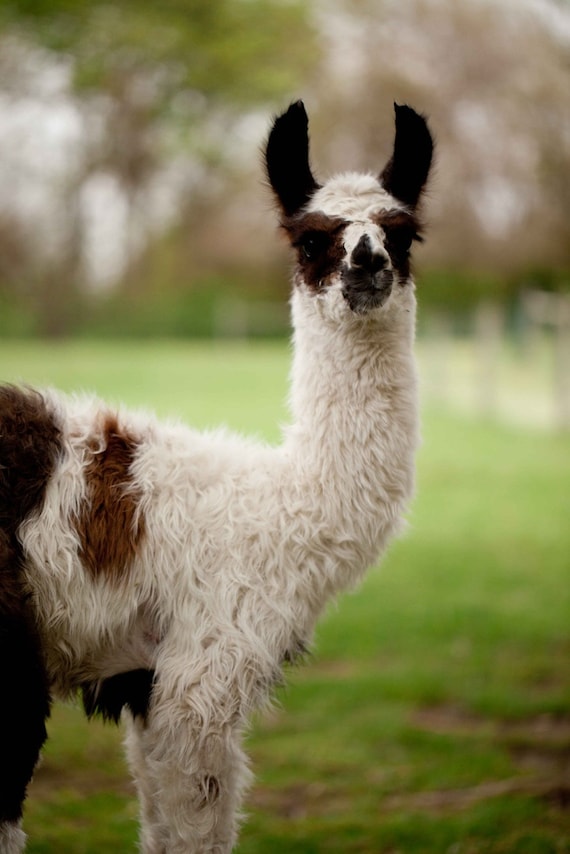
But all jokes aside, I think that may have have been the most viral post because I used Entrepreneur and similar words frequently throughout the post. Now, according Google search bar, I am not a very popular guy (as in, I don't show up within the first ten pages). I had a feeling blog popularity would be relevant in class eventually, so I purposely chose a bizarre, unique, maybe irrelevant title.To test my theory, I typed my Blazing llamas blogger on Google.

What I got was a blog about a llama farm in New York. They actually have nice hand knitted stuff if anyone is interested. And apparently you can sponsor a llama as well.  Here's there link for those who are curious
 http://autumnhillllamas.blogspot.com/

Ladies and Gentlemen, I give you Kara the Llama!
Sponsor A Llama!  Kara

Wednesday, April 13, 2016

Very, very short interview with Entrepreneur Pt. 2

Looking back to my first interview, I'm amazed at the stuff I wrote...

Maybe posting that Star Wars clip was a wee bit dramatic. Looking back in hindsight though, it wasn't THAT bad. I was only trying to have fun with that assignment. Hopefully, you guys did too.

Joking aside, he was not lying. Now I by all means don't really wish to pursue my own venture. Sure, these assignments in no way resemble the real thing, but it does offer us a glimpse of risky yet exciting path of entrepreneurship. The person I interviewed did not lie when he mentioned that it is difficult to set up a business. It felt strange for me trying to merely make light connections with experts. Now I could only imagine the real thing. I guess I may have underestimated this class.

Oh and here is the interview:

What would you do differently?

- Oh that's easy: Not piss the wrong people off. I didn't do so bad in the music industry but honestly there were some people I met that would have been valuable assets. There were moments where I did not take them too seriously or made inappropriate jokes. That being said, I also wish that I was sharp enough to dissociate with people pulling my business down. If there is any takeaway from this, it is to be wise enough to separate gems from rocks.

What happened with your company?

 - I stayed with the company for over 30 years. Once it was time to  retire, I handed the mantle over to my son, whose been in the business with me since he graduated from high school. From what I've heard, the business is still doing pretty well.

Why didn't you sell it or let the Board take care of it?

- Music is my passion. Now I can't sing or play an instrument, but I sure know good music when i hear it. Since my first day working behind the register at the record store I immediately realized that this was something I want to be a part of for as long as I can. Sell the company? You're crazy. This place is my baby. The folk on the Board are good people, but I fear that greed could cloud their judgement. Sure, I want my company to be successful, but I don't want to be associated with shitty music. I'd rather go with small names or unknowns with grand potential and work ethic instead of pretentious assholes who swear that they are all that. I didn't plan on handing the company to my son, but I'm grateful and blessed that he loves music and shares my philosophy. Over the years I've worked with him I came to realize that he is worthy.

When I first contacted him, he asked me how I was doing in the class and all that jazz. After I finished with the interview, he asked me if I "understood". I was admittedly confused at first, but he meant if I understood what was necessary to be successful. The short answer is persistence and will. "Honestly" I said "I understand the concept behind it and I understand what has to be done. But whether I'm good at t or not is the real question" 
He chuckled and replied "Don't worry, just keep your head up and use what you learned. Most of the knowledge you need will come anyways once you use it for real"


Sunday, April 10, 2016

Week 13 Reading Reflection

1. What really surprised me from this reading was customer feedback actually has a purpose behind it. I mean, I used to think that they were there to give the appearance that the customer's opinion was given importance. It is great to hear that such feedback/questionnaire is taken into consideration.

2. One part that I found confusing was the antidilution section of the chapter. 

3. What technique or method is best effective for valuation? Is there a one size fits all technique or is each method unique to a certain category of venture?

4. I did not disagree with the author on any content in this chapter. 

Joy in Failure

So it all started with a barbecue...

No, seriously. My friends and I went went out and bought lots of chicken, ground beef, hot dogs and steaks. While they went off to go grill the chicken, I stayed behind and got to work on the burger patties and hot dogs. The hot dogs were a breeze to cook and they cooperated with me. The burger patties on the other hand, weren't so nice.

To some, making patties are a trivial matter, but for me at least, it was kinda a big deal. In my house, my mother attempted (on multiple occasions) to make burger patties. They tasted fine and great, but they weren't stable. In other words, the patties would crumble. But hey, at least they were tasty. To be honest, I think she may have been cursed or something.

Anyways, I was determined to get it right. After watching a two minute clip of Gordon Ramsey preparing a patty, I got to work and mixed in my ingredients. Consistency was tricky because Ramsey in the video did not give measurements, so I had to wing it. I turned on the stove, poured olive oil on the pan, let it heat up and gently placed the first patty. After the first flip, it splits in half.

Damn it.

My friends do a taste test. Flavor wise it is fine, but the burger is broken. Back to the stove. This time I increase the heat because I thought that fell apart due to it not being cooked well enough. Turns out that wasn't the case, as it once again it split into two.

Okay, so it isn't the stove. Maybe there is too much seasoning in the burger mix, so to fix that,  I added more ground beef to my original batch. As I formed the patty, it did feel firmer. Perhaps, I'll get it right this time. And for good measure, I'll give it more time to cook on the pan. For the third time, I place the patty, let it sit longer than usual and give it the first flip.
It didn't crumble!
I cooked the other side and placed it on a plate for a taste test. While the burger was physically intact, it was burnt on both sides and pink in the center. Also, it was flavorless.

Okay, these were easy fixes. Turn the heat down and add a little more seasoning. Patty #4 was going to be victorious. And it was!

It wasn't the perfect burger, but I was ecstatic that I kept it together (literally). I wasn't necessarily upset because I've dealt with worse, but it was annoying to see my carefully crafted patties collapse in a matter of minutes. I could sill think of ways to improve them, but it's a start. Plus, I can teach my mom how to get it right.

Wednesday, April 6, 2016

Grand Finale (Exit Strategy)

Should I pursue this venture...I'd have to say that I would prefer to stay with the company for a decade or so and then depart. Why I hypothetically choose this route is because humanitarian ventures are slightly more difficult to establish. My goal is to partner up with the big NGOs, but it already difficult to get noticed by them, especially since big NGOs have a hellish bureaucracy. Staying with the company for a decade or so allows me to properly establish relations with the smaller NGOs (which is how I plan to get to the big NGOs). Also, this gives me plenty of time to hone my main product and humanitarian knowledge. 

Truth be told, I would probably go work with an NGO after I leave the company because I want to actually be in the field. Although it would be unlikely for me to start a new venture, my experience with my former business will give me the tools to quickly spot an opportunity in the humanitarian world. After all, there is plenty to improve upon in that sector. Ultimately, all that knowledge I gained with Aquanyte will help me upgrade the NGO I work for. 


Sunday, April 3, 2016

Week 12 Reading Reflection

1. The biggest surprise for me was the difference between administrative culture and entrepreneurial culture. The more and more I read about it, the more I realized how different these concepts actually are. On the surface, they might sound similar, but underneath it there is plenty they vary in.

2. Not that I found it confusing, but I would like more information on the strategy matrix, especially since it seems like a continuation of last week's reading.

3. One question: How did you collect the data for the typical venture's life cycle? In other words, could you give percentages of when they succeed, fail, decline or innovate?

4. Once again, I don't disagree with what the author wrote.

Where We're Going (What's Next)

Expectations
Just to quickly go over my venture, it is a humanitarian based venture that, through NGO partnership, provides water bottle purifiers with solar powered LED lights. In short, this bottle provides clean water and light for people living in poor areas of the globe. When I conducted the interviews, I expected feedback to be about the bottle's material, since I aim to have it made of aluminum. 

Feedback. 
Now, I did not anticipate the feedback I received. The first interview said "Vitamin tablets". What this person was trying to say was vitamins are necessary to the human body, so why not add vitamin tablets. The next interview suggested making gallon sized containers, which is much more convenient for large families instead of having multiple, smaller water bottles. Finally, someone did mention that aluminum could be difficult to hold in hot weather, so why not have the bottle made of rubber.This is definitely worth looking it. 

Reflections.  
My untapped market includes campers, survivalists and military. One person mentioned that a tracker could be installed in the bottle. He argued that there have been cases where people who went out exploring  and got lost. Having a tracking device takes care of that. Another person explained that adding rope and mirrors could suit the "survivalist" bottle. In terms of what I think about this, I believe that these are great pieces of advice. I honestly never considered these features and would find a way to add this into the bottle.