Sunday, April 24, 2016

Complication with Optimistic Outcomes (Final Reflections)

I'm not the first person to admit this: This class is unique.
Hell, how would I have guessed that I would have to write an entrepreneurial based blog for five months?
Anyways, I suppose that besides me having to write a blog for a college class (kinda overpriced if you ask me but that's not the point!), one experience that will stick out was the series of venture posts where I hypothetically build a business. Now, do I plan on pursuing this? No. Did this class make me want to be an entrepreneur? No. Do I really want to dedicate part of my life to making a bottle. Not really. 
Nonetheless, thank you Dr. Pryor. 
I thank you because this made me think critically about my future. I always have my head in the clouds and wonder about the big questions and themes of life (causality vs free will and stuff like that). But for this class, I was required to plant my feet on the ground. Through the assignments, I had to make some evaluations for the future. Kudos to you Dr. Pryor, because few people out there have made me land back on Earth. I'm grateful that I have a slightly better idea of where I want/wish to go.  

For the next generation of ENT3003 students, all I have to say is that you better pick something that is true to you for this blog post, cause you'll be writing extensively on it for the next five months or so. Don't pick the easiest or coolest venture out there to (hypothetically) build. Pick something that you love or something close to it. Makes all the writing more bearable. 
I have to say that this will be my favorite post, partly because it is the last one, partly because it is bitter sweet, but mostly because it is the most personal. I don't see myself as an entrepreneur. I don't really see myself leading people or changing the world, but I do have a better idea of how to lead myself.
And that's a start. 

Week 15 Reading Reflection

1. The world is full of tragedies. Nonetheless, I have to say that this article had a feel good vibe to it with the story of how the SKS stood up against the gang. The reason why this story stands out to me is because of this Humanitarian Assistance class I am taking. Now, the topics aren't necessarily related, but I frequently hear sad or depressing stories in that class, and often the people who truly want to do whats right lose. Don't get me wrong, that class is fantastic and interesting, but it shines light on a topic that deceivingly  seems simple. Unfortunately, the light used to uncover the truth is stark and disappointing (story for another time) . People just don't know the truth behind the subject. Anyways, I praise the author for including that piece in the article.
2. There was nothing confusing about the article.
3. There is great potential in the micro finance industry. Why don't giant organizations rely on local farmers when disaster hits the country? Wouldn't that help the local economy grow? 
4. I do not find myself disagreeing with the author at all.  

Wednesday, April 20, 2016

Venture Concept 2.0

Opportunity

  • My targeted customers aren't out there unsatisfied with their unmet needs because they want to, but rather because they have no choice. This unmet need is clean water and a clean source of energy. The people who are in need of this can be found all over the globe, mainly in impoverished areas and villages. 
  • This opportunity unfortunately exists due to political and economic reasons. Moreover, it has existed for centuries, only it seems more visible today due to new standards of living. 
  • This bottle can also be sold to survivalists and military.
Innovation
  • A water bottle with a filter already exists. None the less, they are made of plastic and can only filter water. My bottle purifies water (yes, there is a difference) and can provide light (LED strips that are solar powered). Plastic may be the material I'll have to use as I cannot think of an alternative.  
  • Regular bottles with a filter sell for somewhere between $20-$30 dollars. My asking price would lie somewhere between $40-$50 dollars. 
  • That is expensive, but what other bottle could do the same? it ultimately depends what the bottle is made of. 
Venture Concept
  • The customers would switch over to my product because it simply offers more. Lightweight and portable, think of this bottle as a powerful solar powered flashlight that you can drink clean water from. My competitors can only filter water, which does not address the biologically organisms (bacteria and microbes) living in the water. My bottle purifies the water, hence taking care of those variables. As a result, this bottle can prevent you from contracting diseases. 
  • Interestingly enough, I intend to sell the bottles in bulk to NGOs (in the beginning at least). I do this because they already have some sort of established relationships with the locals. NGOs could distribute the bottles more effectively than I can because they know who and where needs the bottle. Furthermore, I plan to sell jug sized for families. 
  • My plan is to give prototype bottles to local NGOs for free in exchange for feedback on the bottle. From this feedback, I can modify the bottle until it is ready to be sold. This final product will be the version to hit the shelves when I cater this bottle to survivalists as well. I previously mentioned that the bottle could be sold to the military (surplus stores?) due to its adaptability and durability.
  • Manufacturing could take place in the USA and distribution points could be held in cities nearby the highest concentrations of NGOs.
My greatest assets are my connections that have actually worked with NGOs and have worked closely with locals in impoverished areas. Through these connections, I can be granted an audience and I could attempt to pitch them my idea. The future of the company is to make the bottles more efficient. Also, I want the bottles to be a temporary solution, meaning that I don't want people relying on them forever. The point is for impoverished areas to receive some sort of temporary relief until a permanent solution could be found, My company seeks to create cost effective permanent solutions (solar panels, water pump,water purifiers, etc). As for me, I want to work for Peace Corp, go to graduate school and then work for a think tank or NGO. 

I received a relatively fair amount of feedback from the first venture concept post and the what's next post. One common critique I got was what the bottle material. Ultimately, that is what will determine the price. I previously suggested that the bottle be made of aluminum, but people have pointed out that it would be too costly. Someone suggested rubber,but I think I will have to look into plastic again. Also, one person I interviewed said it could be sold to military personnel. Furthermore, it was said that I could manufacture bigger bottles (jugs) that could serve the needs of a basic family unit. As a result, I took all of those suggestions and added it to my venture concept. 


Sunday, April 17, 2016

Week 14 Reading

1. The most interesting content I read from both chapters was found in Chapter 4, which brought up the concept of "ecopreneurship". It is great to find this in a textbook, especially in today's world where we need to take action towards climate change. After all, it has been shown that it is much more profitable for everyone if we take care of the planet.
2. In chapter 3, I'd have to say the most confusing topic was the "corporate entrepreneurship strategy". 
3. How are current entrepreneurs dealing with our current climate (ch.4)? Could you elaborate more or corporate innovation?
4. I do not disagree with the author on any aspects of either chapter. 

Friday, April 15, 2016

Thanks for the (Google) Gold!

Well, my strategy was to be as business oriented as possible. Aside from that, I tried to keep the content fun and casual. Every now and then I would make a reference to pop culture simply because it made sense when put into context. I honestly wasn't that concerned with popularity, I just tried to have as much fun as possible with it. Did I use social media to my advantage? I mean if you count posting content through Google plus, then I suppose did. I have several hundred hits so I can confidently say that my posts weren't ignored. My top post was the one regarding my Entrepreneurship experience. This was early on in Spring semester though, so it might be because there were more students back then in the class.

Just speculation though.

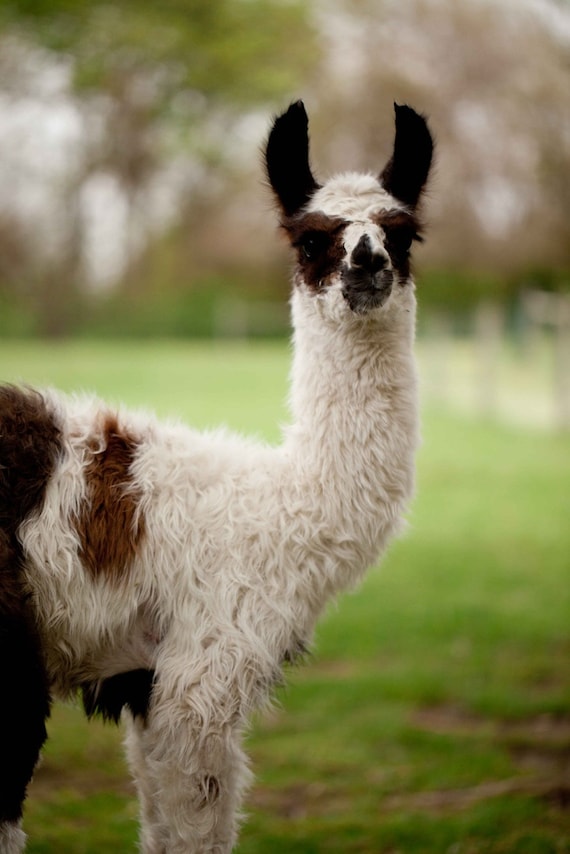
But all jokes aside, I think that may have have been the most viral post because I used Entrepreneur and similar words frequently throughout the post. Now, according Google search bar, I am not a very popular guy (as in, I don't show up within the first ten pages). I had a feeling blog popularity would be relevant in class eventually, so I purposely chose a bizarre, unique, maybe irrelevant title.To test my theory, I typed my Blazing llamas blogger on Google.

What I got was a blog about a llama farm in New York. They actually have nice hand knitted stuff if anyone is interested. And apparently you can sponsor a llama as well.  Here's there link for those who are curious
 http://autumnhillllamas.blogspot.com/

Ladies and Gentlemen, I give you Kara the Llama!
Sponsor A Llama!  Kara

Wednesday, April 13, 2016

Very, very short interview with Entrepreneur Pt. 2

Looking back to my first interview, I'm amazed at the stuff I wrote...

Maybe posting that Star Wars clip was a wee bit dramatic. Looking back in hindsight though, it wasn't THAT bad. I was only trying to have fun with that assignment. Hopefully, you guys did too.

Joking aside, he was not lying. Now I by all means don't really wish to pursue my own venture. Sure, these assignments in no way resemble the real thing, but it does offer us a glimpse of risky yet exciting path of entrepreneurship. The person I interviewed did not lie when he mentioned that it is difficult to set up a business. It felt strange for me trying to merely make light connections with experts. Now I could only imagine the real thing. I guess I may have underestimated this class.

Oh and here is the interview:

What would you do differently?

- Oh that's easy: Not piss the wrong people off. I didn't do so bad in the music industry but honestly there were some people I met that would have been valuable assets. There were moments where I did not take them too seriously or made inappropriate jokes. That being said, I also wish that I was sharp enough to dissociate with people pulling my business down. If there is any takeaway from this, it is to be wise enough to separate gems from rocks.

What happened with your company?

 - I stayed with the company for over 30 years. Once it was time to  retire, I handed the mantle over to my son, whose been in the business with me since he graduated from high school. From what I've heard, the business is still doing pretty well.

Why didn't you sell it or let the Board take care of it?

- Music is my passion. Now I can't sing or play an instrument, but I sure know good music when i hear it. Since my first day working behind the register at the record store I immediately realized that this was something I want to be a part of for as long as I can. Sell the company? You're crazy. This place is my baby. The folk on the Board are good people, but I fear that greed could cloud their judgement. Sure, I want my company to be successful, but I don't want to be associated with shitty music. I'd rather go with small names or unknowns with grand potential and work ethic instead of pretentious assholes who swear that they are all that. I didn't plan on handing the company to my son, but I'm grateful and blessed that he loves music and shares my philosophy. Over the years I've worked with him I came to realize that he is worthy.

When I first contacted him, he asked me how I was doing in the class and all that jazz. After I finished with the interview, he asked me if I "understood". I was admittedly confused at first, but he meant if I understood what was necessary to be successful. The short answer is persistence and will. "Honestly" I said "I understand the concept behind it and I understand what has to be done. But whether I'm good at t or not is the real question" 
He chuckled and replied "Don't worry, just keep your head up and use what you learned. Most of the knowledge you need will come anyways once you use it for real"


Sunday, April 10, 2016

Week 13 Reading Reflection

1. What really surprised me from this reading was customer feedback actually has a purpose behind it. I mean, I used to think that they were there to give the appearance that the customer's opinion was given importance. It is great to hear that such feedback/questionnaire is taken into consideration.

2. One part that I found confusing was the antidilution section of the chapter. 

3. What technique or method is best effective for valuation? Is there a one size fits all technique or is each method unique to a certain category of venture?

4. I did not disagree with the author on any content in this chapter. 

Joy in Failure

So it all started with a barbecue...

No, seriously. My friends and I went went out and bought lots of chicken, ground beef, hot dogs and steaks. While they went off to go grill the chicken, I stayed behind and got to work on the burger patties and hot dogs. The hot dogs were a breeze to cook and they cooperated with me. The burger patties on the other hand, weren't so nice.

To some, making patties are a trivial matter, but for me at least, it was kinda a big deal. In my house, my mother attempted (on multiple occasions) to make burger patties. They tasted fine and great, but they weren't stable. In other words, the patties would crumble. But hey, at least they were tasty. To be honest, I think she may have been cursed or something.

Anyways, I was determined to get it right. After watching a two minute clip of Gordon Ramsey preparing a patty, I got to work and mixed in my ingredients. Consistency was tricky because Ramsey in the video did not give measurements, so I had to wing it. I turned on the stove, poured olive oil on the pan, let it heat up and gently placed the first patty. After the first flip, it splits in half.

Damn it.

My friends do a taste test. Flavor wise it is fine, but the burger is broken. Back to the stove. This time I increase the heat because I thought that fell apart due to it not being cooked well enough. Turns out that wasn't the case, as it once again it split into two.

Okay, so it isn't the stove. Maybe there is too much seasoning in the burger mix, so to fix that,  I added more ground beef to my original batch. As I formed the patty, it did feel firmer. Perhaps, I'll get it right this time. And for good measure, I'll give it more time to cook on the pan. For the third time, I place the patty, let it sit longer than usual and give it the first flip.
It didn't crumble!
I cooked the other side and placed it on a plate for a taste test. While the burger was physically intact, it was burnt on both sides and pink in the center. Also, it was flavorless.

Okay, these were easy fixes. Turn the heat down and add a little more seasoning. Patty #4 was going to be victorious. And it was!

It wasn't the perfect burger, but I was ecstatic that I kept it together (literally). I wasn't necessarily upset because I've dealt with worse, but it was annoying to see my carefully crafted patties collapse in a matter of minutes. I could sill think of ways to improve them, but it's a start. Plus, I can teach my mom how to get it right.

Wednesday, April 6, 2016

Grand Finale (Exit Strategy)

Should I pursue this venture...I'd have to say that I would prefer to stay with the company for a decade or so and then depart. Why I hypothetically choose this route is because humanitarian ventures are slightly more difficult to establish. My goal is to partner up with the big NGOs, but it already difficult to get noticed by them, especially since big NGOs have a hellish bureaucracy. Staying with the company for a decade or so allows me to properly establish relations with the smaller NGOs (which is how I plan to get to the big NGOs). Also, this gives me plenty of time to hone my main product and humanitarian knowledge. 

Truth be told, I would probably go work with an NGO after I leave the company because I want to actually be in the field. Although it would be unlikely for me to start a new venture, my experience with my former business will give me the tools to quickly spot an opportunity in the humanitarian world. After all, there is plenty to improve upon in that sector. Ultimately, all that knowledge I gained with Aquanyte will help me upgrade the NGO I work for. 


Sunday, April 3, 2016

Week 12 Reading Reflection

1. The biggest surprise for me was the difference between administrative culture and entrepreneurial culture. The more and more I read about it, the more I realized how different these concepts actually are. On the surface, they might sound similar, but underneath it there is plenty they vary in.

2. Not that I found it confusing, but I would like more information on the strategy matrix, especially since it seems like a continuation of last week's reading.

3. One question: How did you collect the data for the typical venture's life cycle? In other words, could you give percentages of when they succeed, fail, decline or innovate?

4. Once again, I don't disagree with what the author wrote.

Where We're Going (What's Next)

Expectations
Just to quickly go over my venture, it is a humanitarian based venture that, through NGO partnership, provides water bottle purifiers with solar powered LED lights. In short, this bottle provides clean water and light for people living in poor areas of the globe. When I conducted the interviews, I expected feedback to be about the bottle's material, since I aim to have it made of aluminum. 

Feedback. 
Now, I did not anticipate the feedback I received. The first interview said "Vitamin tablets". What this person was trying to say was vitamins are necessary to the human body, so why not add vitamin tablets. The next interview suggested making gallon sized containers, which is much more convenient for large families instead of having multiple, smaller water bottles. Finally, someone did mention that aluminum could be difficult to hold in hot weather, so why not have the bottle made of rubber.This is definitely worth looking it. 

Reflections.  
My untapped market includes campers, survivalists and military. One person mentioned that a tracker could be installed in the bottle. He argued that there have been cases where people who went out exploring  and got lost. Having a tracking device takes care of that. Another person explained that adding rope and mirrors could suit the "survivalist" bottle. In terms of what I think about this, I believe that these are great pieces of advice. I honestly never considered these features and would find a way to add this into the bottle. 


Wednesday, March 30, 2016

Venture Concept No.1

Opportunity

  • My targeted customers aren't out there unsatisfied with their unmet needs because they want to, but rather because they have no choice. This unmet need is clean water and a clean source of energy. The people who are in need of this can be found all over the globe, mainly in impoverished areas and villages. 
  • This opportunity unfortunately exists due to political and economic reasons. Moreover, it has existed for centuries, only it seems more visible today due to new standards of living. 
  • This bottle can also be sold to survivalists.
Innovation
  • A water bottle with a filter already exists. None the less, they are made of plastic and can only filter water. My bottle purifies water (yes, there is a difference) and can provide light (LED strips that are solar powered). Instead of plastic, I am currently seeking out a different material that can be tough and durable yet cheap to manufacture. 
  • Regular bottles with a filter sell for somewhere between $20-$30 dollars. My asking price would lie somewhere between $40-$50 dollars. 
  • That is expensive, but what other bottle could do the same?
Venture Concept
  • The customers would switch over to my product because it simply offers more. Lightweight and portable, think of this bottle as a powerful solar powered flashlight that you can drink clean water from. My competitors can only filter water, which does not address the biologically organisms (bacteria and microbes) living in the water. My bottle purifies the water, hence taking care of those variables. As a result, this bottle can prevent you from contracting diseases. 
  • Interestingly enough, I intend to sell the bottles in bulk to NGOs (in the beginning at least). I do this because they already have some sort of established relationships with the locals. NGOs could distribute the bottles more effectively than I can because they know who and where needs the bottle.
  • My plan is to give prototype bottles to local NGOs for free in exchange for feedback on the bottle. From this feedback, I can modify the bottle until it is ready to be sold. This final product will be the version to hit the shelves when I cater this bottle to survivalists as well. 
  • Manufacturing could take place in the USA and distribution points could be held in cities nearby the highest concentrations of NGOs.
My greatest assets are my connections that have actually worked with NGOs and have worked closely with locals in impoverished areas. Through these connections, I can be granted an audience and I could attempt to pitch them my idea. The future of the company is to make the bottles more efficient. Also, I want the bottles to be a temporary solution, meaning that I don't want people relying on them forever. The point is for impoverished areas to receive some sort of temporary relief until a permanent solution could be found, My company seeks to create cost effective permanent solutions (solar panels, water pump,water purifiers, etc). As for me, I want to work for Peace Corp, go to graduate school and then work for a think tank or NGO. 

Or at least, that's the current plan. 


Saturday, March 26, 2016

Week 11 reading reflection

1. I already knew from the get go that there were SOME companies out there that suffered from mismanaged and unorganized innovative strategies. However, it did surprise me that far more suffer from this than I originally anticipated.
2. One part that was confusing to me was finding the "ideal" innovative strategy.
3.  This is an elaboration of my previous confusion. Could you elaborate on the landscape map you provided? Also, how soon does all this pay off. Perhaps a well established company could endure years of heavy spending in the innovation department, but what of a small, new company?
4. Not so much in disagreement, but rather another question: You earlier mentioned that not every company can use the same strategy. Does this mean that each company has to search it's own unique approach? 

A.M.A.Z.O the Amazon Whisperer

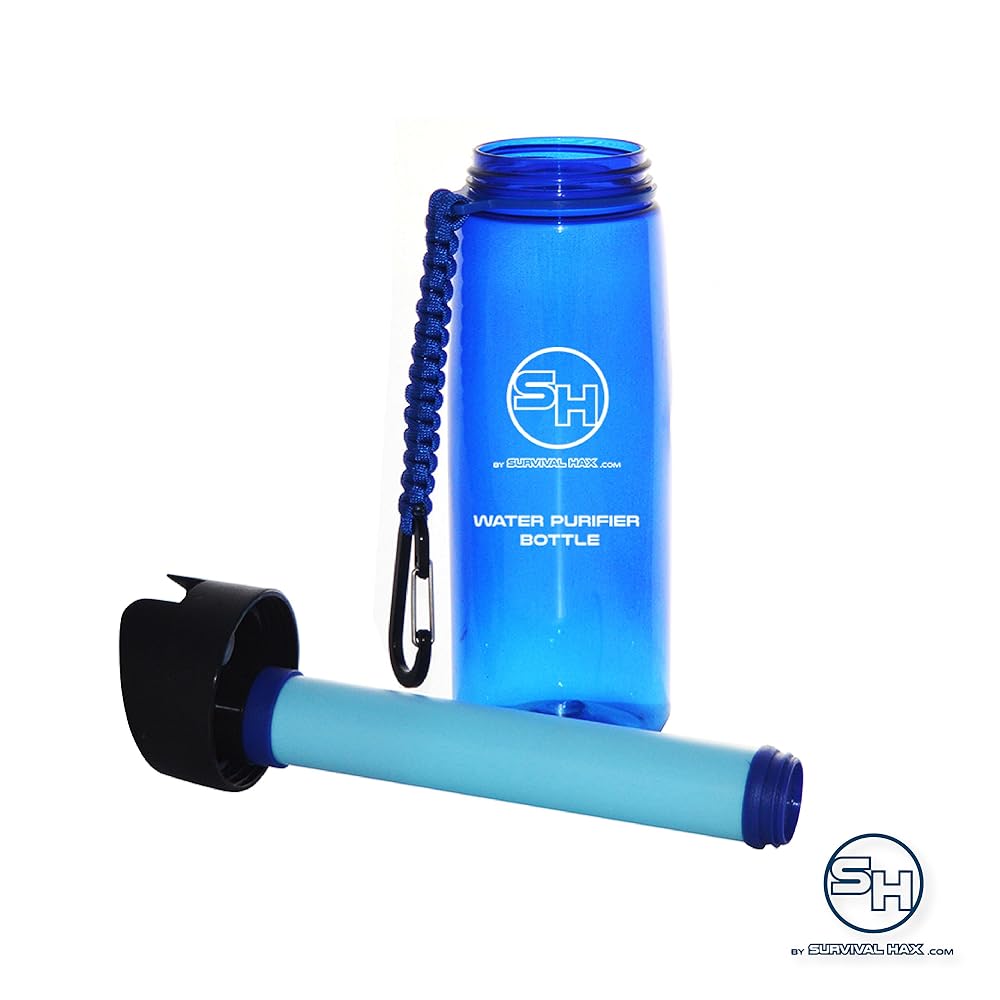
Water Purifier Bottle for Hiking, Survival, Camping, Backpacking - Paracord Travel Strap - Advanced Filter Straw - BPA Free (Blue)
As of now, my primary revenue driver is the bottle itself. I prioritize the bottle because it makes sense (for me at least) to focus on the area you are strongest in. I actually have this bottle designed and prototype-ed so I will stick with it for the moment. My bottle currently offers clean water and solar powered energy. For future designs, I can add in a flint/magnesium rod and styptic pencil to suit survivalists. 

There is a product out there that is similar to mine. If you could so kindly direct your attention to the right, you will see this bottle. 
Anyways, reviews are pretty good for the most part, however, it does have an Achilles's heel: durability and filtration. This bottle only filters water and even it's own filter has an expiration date. Moreover, this filtration has its limits because it only deals with particles, not biological organisms. That is called purification. Also, this bottle is made of plastic. After reading this, I will modify my product to purify, not filter. As for this bottle, I would make it purify and be made of something stronger than plastic. This bottle offered by Amazon would make a good collection for those who really just need a water filter, not the additional light energy and other accessories.  


Wednesday, March 23, 2016

My Unfair Advantages

1. Prototype
- This is an advantage because instead of having an idea, I have an actual functioning prototype. The designs are in a flashdrive and just need extra tinkering. I have something concrete  instead of something abstract.
2. Spanish
I speak spanish fluently, therefore giving me access to an untapped market.
3. Team
I have a group of people who each specialize in a different aspect of the cup. They would be willing to continue working on this project
4. Fieldwork
One of my connections has conducted fieldwork in Haiti and she could help me introduce the project to the area
5. Cheap Supplier
My friend can cheaply produce the item in bulk, especially since he needs to just plug in the data, not actually build it from scratch.
6. Nonprofit connections
My other connection has worked in multiple nonprofits and has worked closely with the UN. Remember, its about who you know. This is my best weapon in my arsenal. I'll explain later.
7. Swiss Knife
Someone commented that my venture already exists...anstart.'s right it does. However, this model particular does krpe than filter water. It can produce clean light, start fires and heal cuts.
8.  Flexibility
This bottle can appeal to survivalists instead of only improvised people. This is another untapped market my bottle can potentially have a hit in.
9. Military?
If I made some extra modifications to this bottle, it could potentially be useful to soldiers, particularly to the infantry soldiers.
10.  Domestic
This bottle doesn't just have to serve those abroad, but also to the ones in need here in this country. We could work with homeless centers and Gainesville could be an excellent place to start.
My best unfair advantage is my connections affiliation with non profits. He could direct me to an organization that is willing to experiment and that could actually be in need of this product (they just don't know it yet). My other connection that has conducted fieldwork in Haiti could help me because she has a personal connection with them. Trust is key, and with this foot in the door, I can access an audience.

Sunday, March 20, 2016

Week 10 Reading Reflection

1.  What was the biggest surprise for you in the reading? In other words, what did you read that stood out the most as different from your expectations? 
What surprised me the most from this reading is how much I don't know about finance. All this jargon made my head spin a little and to be honest, I had to read slower than I am used to. Nonetheless, this knowledge will be useful as the organization I work for (Hopping 4 a Cure) is currently trying to figure out the necessary budget needed to run all the planned activities. 
2.  Identify at least one part of the reading that was confusing to you.
What I found confusing about the reading was the fixed cost assumptions. How much of a role do "variables" play in this model?
3.  If you were able to ask two questions to the author, what would you ask? Why?
If I am starting out a company, chances are that my operating budget will underestimate the total costs. This typically happens when one decides to open a restaurant. My first question is: what methods are there to better forecast my expenses, especially when I haven't made sales yet?
My second question is: Do the financial formulas take into account external variables. For instance, what if the company faces an unexpected lawsuit or disaster. Will it have the budget to deal with such crisis?

4.  Was there anything you think the author was wrong about? Where do you disagree with what she or he said? How?
It is difficult with me to disagree on a topic I know very little about. Reading one chapter that really is just a vague summary on a complex topic does not give me enough information to be able to raise questions. As a result, I do not disagree with the author at the moment

Growing my Social Capital

Industry:
My expert for this category is Diego Valderrama. Mr. Valderrama is the professor for this Humanitarian assistance class I currently taking. In terms of his background experience, my professor has experience in international development. He has worked in impoverished areas in Africa and South America. Moreover, he has worked in projects led by the United Nations. As mentioned earlier, I met him through this class he is teaching. I simply went up to him, introduced my "business venture" and asked for his help. I sent him an email afterwords with more information. Reception wise, he thought my idea was excellent and referred me to Vestergaard, the company that invented the life straw. How Mr. Valderrama could assist me is by steering me into certain non-profits that could benefit from my idea.

Market:
My market expert is Crystal A. Felima. She is part of the Department of Anthropology staff and is my instructor for Cultural Anthropology. She specializes in Disaster anthropology and has conducted fieldwork in Haiti for twenty months. Again, I met her through my class. However, this time I initiated contact through an elaborate email. Like Mr. Valderrama, she supports my venture, especially since she knows that clean water and electricity are hard to come by in Haiti. Ms. Felima has frequently interacted with people living in impoverished areas in Haiti and because of this, I can further modify the bottle and receive direct feedback from the people themselves. 

Supplier:
My supplier is actually a personal friend of mine that I met through kickboxing. Now while he doesn't own the company, Herman works for a business that "prints" metal. Think of a it this way: you design something on autocad, save it on a flash drive and plug it into a 3D printer. Instead of plastic, however, it is aluminum. Now, this company does not exclusively work for a certain type of industry, but it can be useful for my venture, especially when I have someone on the inside. He said should pursue this path, t will be cheaper for me because I already have the design ready. 

Reflection time!
I feel that I may have been luckier than most for this assignment because I already, for the most part, somewhat already established contact. Think about, what are the chances that both of my teachers have experience in international development? The UN? Twenty months of fieldwork in Haiti? Then there's the fact that my friend casually mentioned that he got a job at the metal printing place without him knowing about my venture. In the end though, I still had to reach out and ask the question, which is not as intimidating as it seems, especially when they can potentially have interest for your cause

Wednesday, March 16, 2016

Elevator Pitch #3

Hey guys! Reflection time!


The commentators from the previous post pointed  out that the biggest flaw with Elevator pitch #2 was sound. Hopefully you could hear me better this time around. Aside from that, the product remains the same (but I'm open to any new advice!). I also mentioned that it is not a permanent solution, but more of a temporary relief. Moreover, I took advice from a person (different post) that mentioned that the bottle could be tailored to survivalists. Any other concerns please tell me below. Till next time.

Sunday, March 13, 2016

My Secret Sauce

How to make a Gus

For whatever reason you want to build your own Gus, all I have to say is Thank you and Good luck. I think one crucial element to my "secret sauce" is being quiet. Seriously, I don't talk much. Perhaps it is because I place an extremely high value on listening. When I'm with my friends, I do my fair share of talking, but when I'm with people I don't know too well, I choose to remain quiet because it is my way of trying to understand who they are. I feel like if I talk too much, I may be missing out on what the other person has to say. Another important ingredient you need to build a Gus is dark humor. I am an avid fan of Louis C.K. Black comedy is sometimes frowned upon because it can be deemed "inappropriate" The way I see it, black comedy isn't meant to make fun others, but rather to put a "positive" spin on situations. I know that it is a difficult to grasp, but for me at least, it offers a unique perspective and some humor. The third thing that makes me, well, me is my willingness to cooperate and compromise. It is ideal to have things always go your way, but the reality is that that will mostly likely not always be the case. Compromising and cooperating can get you further. At the same time, I know my limits. It is one thing to compromise and give up something, but it is another thing to sell out and contradict your own morals. Number four on the list is helping others. I used to be a biology major but switched over to political science. I used to think that being a doctor was the only way to help others, but through this major I could also reach that goal. I want to work at a think tank and help people through policy. The final component of Gus is my attempt to empathize with others. I don't always succeed, but I keep on trying. In conclusion, all of these ingredients to my "secret sauce" may seem to appear to only focus on emotions, but the truth is that these qualities I work on will help on me on the path I pursue. Hopefully, I'll get there. Peace.

1. Dakotah
Dakotah explained how I attempt to connect with people on a deeper level and how much I love movies and my major.
2. Derek
He brings up my empathy and how I always try to help others. 
3. Tyler
I apologize for the profanity, but I chose to keep this video not because he says that I am trying to get ahead in life or that I want to help people. I am keeping this video because that he who he is and I don't want him to pretend who he isn't. Again, I apologize if anyone gets offended (three bleeps). 
3. Bella
She talks about how we met along with other details.


What genuinely surprised me was that I'm succeeding in what I'm striving to become. For instance, some people out there believe that they are funny when in fact they are not. In this case, I'm happy that my ego isn't getting the best of me and that the results are there. Hearing this gives me hope that I am on the right path and that the message I am trying to get across is getting across. I have to say, I'm surprised the dark humor wasn't mentioned. Oh well.

Week 9 Reading Reflection

1. It is odd how just the other day I was reading about how outdated and ineffective surveys are (in relation to the election polls). As it turns out, I am just as surprised that customer surveys are ineffective as well, especially if one considers how much more interaction there is between customers and businesses.

2. What I found confusing was why surveying and polling methods are still outdated, especially when we have the technology to do the job properly. I know I earlier mentioned that it surprising, but to me it is also confusing as well.

3. How do you classify what data is useful and what isn't. Shouldn't there be a way to make all the data useful? I mean, wouldn't there be risk in missing data to capture the overall picture?

4. I don't find myself disagreeing with the author. If I had more knowledge I could perhaps offer better insight. I do agree that surveys, whatever niche it covers, should be updated in in order to capture a better picture of what the public wants. 

Tuesday, March 8, 2016

Here's a napkin...with an idea on it (part II)

I'll start with the basic reiteration of my business idea.

I have experience with product designing and entrepreneurship due a invention showcase competition I participated back in the summer of 2016. Moreover, I have worked with charities before so I have a general idea of what they seek and how they operate. Then there's the fact that I am fluent in Spanish, which greatly expands my ability to seek clients. I'll admit though that this plan, should it ever come to life, would operate best with the help of my old team. What I am offering to impoverished villages ad slums is a durable, lightweight bottle that can filter clean water and act as a source of lighting (the lid of the cup would have bright LED lights that is solar powered). Although there are long term solutions that could be implemented, they take time to execute. Until such projects can go into effect, these bottle would provide temporary relief. This bottle offers lighting and clean water, which I believe are basic necessities and rights that people in need won't deny. However, the middle man of this operation would be NGOs and non profits, as they know the areas that require aid and assistance. One idea I had in mind is to start by giving free bottles to non profits and request feedback on their effectiveness and such. Once improvements could be made, I'd start selling them (those that participated in trials would receive generous discounts).

It is important to note that this business idea would only temporary as the core goal is to provide temporary relief until a more viable and permanent solution could be found. In spite of good intentions, there has to be ways to keep the company going (without violating ethics!) .To keep the company running, we could also tailor to survivalists and provide other services for non profits. Heck, we could become a non profit and have our own refugee camps. But if that were the case, then eventually have to solely rely on donors and international aid. Yeah, there are kinks that still need to be worked out...

Feedback

The primary feed back I got is that I should also tailor to different audiences (survivalists etc). Aside from that, I didn't receive anything else. I would appreciate more feedback and welcome constructive criticism. 
Seriously, this was the feedback I got: http://blazingllamas.blogspot.com/2016/02/heres-napkinwith-idea-on-it-phase-1.html

Monday, February 29, 2016

Tenacity and Endurance (Half-way reflection)

I'll be honest: This isn't my favorite class.

True there aren't any tests and Professor Pryor is a fun professor who strives to make the class as exciting as possible. I am truly grateful for that. Admittedly though, I do make a face when I see upcoming assignments and on some days I'll even curse. If its a bad day I'll curse in Spanish.

In this assignment I've been asked what behavior I've used/developed for this class. Well, there's motivation. My motivation is to try to raise my gpa as much as possible this year because I know that there is room for improvement. 

Did develop a particular attitude for this class? Of course not. But I can say this: this class has helped me to improve in tenacity and endurance. I didn't have a moment where I wanted to throw in the towel, drop the class, cry about it, etc. Instead, there were moments that I simply didn't want to do the assignment. At the end of the day, what kept me in check was the fact that these assignments are worth 1-2 points. Experiences in the past are what remind me not to give up and to remain tenacious. Believe me, I've learned the hard way. 

Sure, these assignments are practically worth nothing, but slip up constantly and it starts to add up. In a way, this is what makes this class dangerous because it truly is tempting to skip a couple assignments. To future students, I know that this class can be frustrating and there will be times where you will start skipping assignments. But if you throw in the towel, what comes after may lead to greater consequences than intended. Don't take this advice only for class, but for life as well. If I had to sum up everything in two words, here is advice a person once told me: "Endure always" 
Here are some tips for the class

1) Put effort into the assignment. B.S-sing can only get you so far in life.
2) Stay on track with the assignments. They quickly stack up
3) DON'T FORGET TO DECLARE!
4) Accept that there is no way around the assignment. Might as well have fun with it. That is what helps me get through this class. 


Sunday, February 21, 2016

Week 7 Reading Reflection

1. The biggest surprise for me in the reading was how these economists view the market as something "living" instead of something that is purely technical.
2. What I found confusing about this reading was how understanding the personality of customers could be accomplished.
3. When doing marketing research, how do you correctly isolate variables? If you are trying to understand your customers, aren't there other factors to take into consideration as well?
4. I do agree with the authors that trying to truly understand their consumers is the key to success instead of segmenting them into different categories (sex,  race, etc)

Giving free money away

I have to admit that I did believe that this assignment would be difficult to pull off, especially since we are, from childhood, primed to not accept gifts from strangers.  With this in mind, I went to oaks mall with my friend Tyler to give it a shot. How I picked people...well I aimed for people that were alone. Aside from that, I didn't have any other criteria to select my unknowing participants. My approach was simple: I just went up to them and asked "Excuse me would you like a dollar?" The first person said yes without hesitation. The second person was skeptical, but I insisted that I had no hidden agenda and that I was being genuine with my offer. She felt more comfortable and accepted my dollar. The third person refused my dollar because he was in the middle of something extremely important. In short, I got 2 out of three people.

Wednesday, February 17, 2016

Elevator Pitch 2

Warning: This is just an idea. All the kinks have not been worked out that. Remember this now.
Hey guys
In previous posts I talked about how I participated in Shark Tank style competition last summer (took place on my birthday actually). Anyways the idea is this sturdy yet lightweight bottle that can filter water plagued with microbes and provide bright lights for people who lack these essentials. Ideally, I would like to add more utilities to the bottle and yes I recognize that there are other viables solutions (installing a generator, water pump etc) but know that these projects can be expensive and take time to do. These bottles are meant to be used immediately and act as a remedy until a more permanent solution could be found/implemented. I would really appreciate your feedback. Thanks! 

Sunday, February 14, 2016

Interviewing Customers No.3

EDIT: I had some technical difficulties with the videos so I will be uploading it ASAP. For the meantime, here is my post. 

In my first customer interview assignment, I mentioned that the service I was offering was "fun" In other words, for a very small donation, one could participate in exciting activities, namely recess games. For example, for an entrance fee of $5, you could participate in a Four Square or Knockout tournament. It would be ideal to offer prizes to the games` winners. Just like last time, it did feel uncomfortable to go up and ask people, but for the most part once I started asking, it got easy from there. I kept the first two questions: 1) Have you every donated to charity and 2) Did enjoy recess games as a child? My original question was "Would you pay to participate in games to raise MS awareness?" My new question is "For a small fee of $5, would you participate in recess based games to raise money to fund MS research?" This question lets people know of much they are paying and also lets them know that it won't be a monthly commitment, as most charities are. 

Saturday, February 13, 2016

Porter's Five Forces (Reading Reflection, Week 6)

1. The biggest surprise for me was that there are five, not three as I originally presumed. Porter outlines that there are five forces (existing rivals, new entrants, suppliers, substitutes, can customers). I considered rivals, entrants and substitutes to be the same. 

2. I did not find the article confusing. 

3. Are there variables to be considered? Wouldn't government be a force as well? 

4. Mr. Porter, would innovation be considered as a factor? 

Thursday, February 11, 2016

Here's a napkin...with an idea on it (Phase 1)

Hey guys! My name is Gus (but I'm sure you already knew that). What I want in life? Well I would like to: get a job, study abroad and intern in Jordan, learn Arabic and/or French, master Kendo, learn how to do a one arm handstand, join Peace Corp, go to grad school, visit Angkor Wat, have a road trip on the West Coast, move to NYC or San Francisco, work at a think tank. Now what does this have to do with the business concept? 
Absolutely nothing.
I just wanted to share this with you guys. If I had to start a business though, I would probably use Aquanyte. Last summer I participated in an invention showcase and my team came up with a survival cup. You could find the details of how that turned out in an older post. Anyways, I'd modify the cup to tailor humanitarian needs. Instead of marketing it to survival enthusiasts, why not sale it humanitarian organizations. If I learned anything from that competition, it is working with others, how to compromise, and how to use Autocad (sorta). I am also a fluent in Spanish and I have experience in customer service, as I used to work as a face to face fundraiser for a charity. 
The Plan
My target audience would be the people in need of light and water. Now that cup itself would have a built in water filter as well as a miniature light (solar powered). The idea is that this bottle would be beneficial for people living in villages and slums. Moreover, these places typically lack electricity and safe drinking water. The Aquanyte bottle could provide both. Sure, the more viable solution would be to have a functioning water system and electric generator, but these bottles would be inexpensive and easier to implement. Plus, you can take it on the go. Like I said, I speak Spanish fluently, so it would make sense to start in Central and South America. What I would do is provide a prototype to humanitarian organizations working in these impoverished areas and ask for their feedback. I would start off with small organizations and eventually work my way towards supplying major humanitarian organizations. People would pay for this products because it can literally improve their lifestyle. This is, of course, a very rough outline and there are plenty of variables I haven't worked out yet, so I would greatly appreciate any feedback. 

Sunday, February 7, 2016

Week 5 Reading Reflection

1.      What was the biggest surprise for you in the reading? In other words, what did you read that stood out the most as different from your expectations? 

I knew that there were risks involved in starting a business, but I did not realize that there were that much challenges involved.  

2.      Identify at least one part of the reading that was confusing to you.

This didn’t necessarily confuse me, but what intrigued me was that there are startups out there that don not have a clear objective on what they want to provide.

3.      If you were able to ask two questions to the author, what would you ask? Why?
How long does the poststart-up phase last? When it does conclude, does the entrepreneur stay with the company or move on to another project?

4.      Was there anything you think the author was wrong about? Where do you disagree with what she or he said? How?

In my opinion, I believe that the author failed to mention that capital could also be an external problem instead of only an internal problem.


Sunday, January 31, 2016

Week 4 Reflection

1. I guess what stood out the most in the reading is that fact that more and more corporations are beginning to follow a "code". In other words, corporations today are sticking more strictly to their guidelines in an attempt to exercise legal and ethical practices. For me this was a surprise because personally I've never seen "corporation" and "ethical" in the same sentence. 

2. What I found confusing about the text was that it never really addressed whether profits outweighs morality or vice versa.

3. If you had a business, would your decisions always be in favor of the company, regardless of what happens to outsiders? Could you provide an example of something that is "illegal but ethical"?

4.  In this chapter, I don't disagree with the author. I do agree that businesses and corporations should abide by the legal system because it does establish some sort of accountability. At the same time, they should not take advantage of the legal system to advance their greed or personal agendas. In other words, they should also be ethical in their practices.

Entrepreneurship Opportunity, take 1

Today in age most high profile charities/non profits do not offer "fun" events. Perhaps the most notable one would be Jump Rope for Heart, which as the name implies, involves people jump roping to raise money and awareness for heart disease. The opportunity I talked about isn't new. I'm actually part of a UF charity called Hopping 4 a Cure, which is a non profit that raises awareness for MS (multiple sclerosis). Why I chose this as my incentive is because this year we are launching multiple events throughout the year (this has never been done before). The main event for the organization is Hopscotch, but every month we will host "recess" games. My questions were simple as I wanted to know if people would actually pay money to participate in recess games to raise awareness for MS. 

I asked:

1) Do you donate to nonprofits?
2) As a child, did you enjoy recess games?
3) Would you be interested in participating in friendly recess games to raise awareness for non profits?

This opportunity offers fun in exchange for funds, thus giving people a reason to join the cause. In regards to the experience, I'd have to say that it wasn't all that bad. Personally the only awkward part for me was actually stopping the person. Once I had their attention, it was relatively easy from there

Wednesday, January 27, 2016

Top 5 Biggest Problems (and the "easiest" to execute)

  1. Global Warming
    1. The effects and implications of Global warming are endless. Not only are we talking about rising sea levels, but also increasingly acidic oceans and climate change. For those of you that don’t know, climate change can have a negative impact on agriculture (that’s our food people!). Moreover, I’m only talking about how Global warming is affecting a single species (us). Imagine how this will affect the other million species that live on Earth
  2. Energy
    1. There is a lot of back and forth between what alternative energy source should be used. Each alternative has its pros and cons. Either there isn’t enough or it isn’t safe.
  3. Disease Eradication
    1. Isn’t it sad to think that we have people dying from completely preventable diseases in 2016?
  4. Trash, Trash Everywhere
    1. Assume that you live in the only comfortable house within a million mile radius. Why would you mistreat and pollute in the place (as far as you know) you call home?
  5. Food
    1. In spite of the gargantuan human population, there is actually enough food to feed everyone.
Solutions

  1. Disease Eradication
    1. As mentioned earlier, through education and awareness we can teach people how to have proper hygiene and sanitation. Also, sending professionals to debunk myths about vaccinations and diseases.
  2. Food
    • Scientists and farmers should work together and travel abroad to teach locals about safe and effective farming techniques.
  3. Trash, Trash Everywhere
    1. Tougher laws should be passed that prevent corporations and businesses from dumping trash into the ocean. There should be greater incentive to recycle and manufacture products from recycled materials. Countries such as Netherlands have funded projects that build small scale floating nets (marine life friendly) to filter trash.
  4. Energy
    1. One alternative energy source that hasn’t been widely discussed is Helium 3. The sun emits millions of tons, but the Earth electromagnetic field blocks most of it. The moon, on the other hand, has plenty. The issue with this is that it expensive. Overall, I feel that if more research were put into lunar mining, then a cheaper method of He-3 extraction could be found.
  5. Global Warming
    1. Most practical way is the educate people about climate change and to aggressively push Congress and other governments to do more about than they already are.
I placed Global Warming as the top problem because it will, in the long run, cause the most widespread damage. In fact, although we aren't the point where the damage will be irreversible, we will get there if we do nothing to improve the situation. Furthermore, since it is, in my opinion, the hardest to carry out, it is best if we start now because the situation will only get worse if we keep waiting. Disease eradication is the easiest (relatively speaking) to execute since we can spread awareness and send more doctors to poverty stricken countries/cities.

Sunday, January 24, 2016

Identifying Local Opportunities and stuff

1. 9th U.S. death is linked to air bags - Largest auto safety recall in U.S. history is expanded by 5 million in Takata case (http://infoweb.newsbank.com.lp.hscl.ufl.edu/resources/doc/nb/news/15A8D525C1F7FF70?p=AWNB)
Takata is a automotive part manufacturing company that is a major supplier for automobile companies. In recent events, airbags made by Takata have proved to be nonfunctional, as ten people have died already from faulty airbags. As a result, major motor companies such as Ford have made a major car recall. This is, in fact, the greatest automobile recall ever. What is even more concerning is that people with car models older than 2008 (and that reside in high humidity) are at great risk of having broken airbags. As a result, people with such models should go have their airbags fixed.

2. Out of Service - Will we ever fix the T? Two ex-governors, a mayor, the MBTA's chief, and the secretary of transportation tell us why we're getting exactly nowhere.(http://infoweb.newsbank.com.lp.hscl.ufl.edu/resources/doc/nb/news/15A343A5AC2C1EE8?p=AWNB)
The T is a the main train station for Boston. For more than a decade the T has been in need of newer models. It does not help that the brutal winters of Boston negatively impact the train station. In short, the train carts need to be updated. This severely affects people from all walks of life, as thousands depend on it for transportation to get to work.

3. Bay Bridge workers aim to stop stormwater leaks (http://infoweb.newsbank.com.lp.hscl.ufl.edu/resources/doc/nb/news/15A90AABC6A9AC58?p=AWNB)
El Nino, a weather phenomena, has been producing storms that have affected the Bay Bridge.  Workers have been working nonstop trying to keep water out off the bridge, as it cannot sustain itself under extreme moisture. The underlying issue to gradually upgrade to be more moisture resistant, since simply plugging holes is the same as applying bandages- it only solves problem temporarily. This affects millions, as again, the bridge is a major road.

4. Downtown Orlando draws more tourists - Repeat visitors, word of mouth help trend grow (http://infoweb.newsbank.com.lp.hscl.ufl.edu/resources/doc/nb/news/15A8E7D711384F58?p=AWNB)

Orlando is a grand hot spot for tourists all over the world. With endless attractions, the city is limited by the fact that tourist companies are not offering enough tours. If more tours were offered to meet the demand, then the city could make more profit, which can be used to improve Orlando. By not offering more tour services, the city is not fulfilling its full potential.

5. Livestock producers reminded to report forage losses by Feb. 1.(http://infoweb.newsbank.com.lp.hscl.ufl.edu/resources/doc/nb/news/15A87C9BE44C57D8?p=AWNB)

In Baker-Grant county, Oregon, livestock producers are facing losses as drought and wildfires have limited grazing for livestock. With droughts and wildfires, livestock producers will continue to suffer losses until they can find a way to create drought resistant seeds or some other viable solution. 

Friday, January 22, 2016

Very,very short Interview No. 1

The person I chose to interview was a family friend of mine named Jorge Washington Vecilla. Way back in the early 1950s, Jorge had a deep passion for music. In fact his first job was working as a cashier at the record store. However, he wanted to do more than stand behind a box and sell records. Jorge dreamed of being part of the actual music making process and wanted to own his own production label.

And that’s what he did.

What do you wish you had been taught in school before setting out on your own path as an entrepreneur?
Well, you have to understand that in those days, especially in Latin America, college was not really as prioritized as it is today. I simply graduated from high school and went straight to work. Now, I never really thought myself as an entrepreneur now that you mention it. All I wanted to do was be the director, the behind the scenes guy, the...the leader of the orchestra if you will. I guess all I really wanted to do was give good music to the people of Ecuador.
I knew it was going to be hard but damn I wish I would have been warned that it was going to be hard. Seriously, getting all the components and people together is quite of a process. I wish I would have be told that there were going to be plenty of sleepless nights and disappointments. In the end, persistence, will and work ethic is what will pay off.

What does it mean to be an entrepreneur?
Like I said, I never really gave myself that title. Producer is what always came to mind. To be a producer or “entrepreneur” means to use all resources available to you. ALL. RESOURCES. It means to work with people you don’t like and adapt to inconveniences. You have to reach out and find tools and people, which is not as easy as it sounds. At times it will be uncomfortable. But like I said, it is all part of the process. Sometimes the thing you need or want will not be there, but hey, take a deep breathe and continue. Someday it will be. You just have to chin up and be patient.

What should my expectations be in this course?
Honestly, there will always be a difference between theory and reality. You know that you will fail. But do you truly know what it means to be knocked down hard? I think this class will serve as a warning to all who want to be entrepreneurs. It will not be an easy path. At the same time, I feel that this class may give you a taste of triumph. No matter what happens, never lose your sight on victory, because trust me, the actual feeling of it is indescribable.

By the end of the interview, I'm not that all surprised by his responses. It reminded me of that scene when Luke Skywalker told Yoda "I'm not afraid" Yoda merely looks at him and says "Good. You will be. You will be" As students, we can only be taught theories, which in a way makes us naive. The feeling of failure and victory cannot be taught, only experienced.